Easy Cotton Crochet Dishcloth Pattern for Beginners
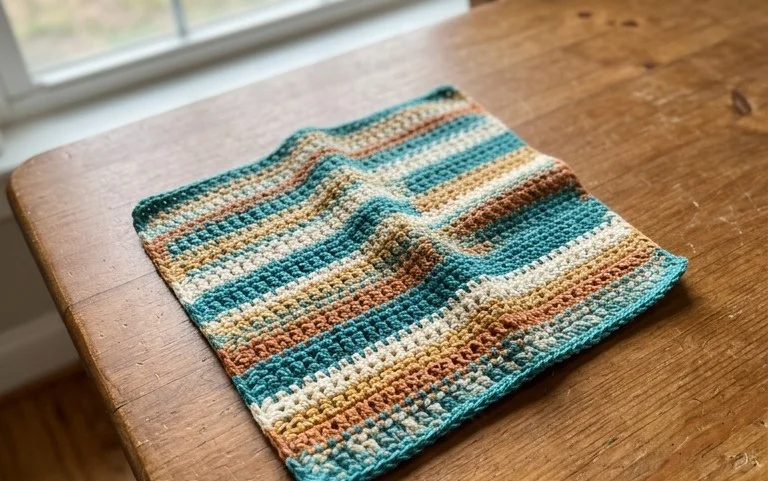
A square of cotton worked in single crochet makes a firm, flat dishcloth that feels comfortable in the hand and holds up to everyday washing. This beginner-friendly project suits anyone learning to keep an even stitch count, and it is small enough to finish over a couple of relaxed evenings. It also makes a useful handmade gift tucked beside a bar of soap or folded with a second cloth. As you work, the clear rows make it easy to spot a skipped stitch or an accidental increase before the edges begin to slant. You’ll find the yarn and hook details, gauge, sizing notes, and row instructions here, along with practical tips for washing and adjusting the finished cloth. The pattern uses basic chains and single crochet, with no separate border or seam to sew.
Why You’ll Love This Pattern
This cotton dishcloth is made in simple single crochet rows, so the fabric is sturdy, flat, and easy to keep track of. A single color uses about 90 yards of yarn, making the project a practical way to use part of a cotton skein. The small size also makes it easy to carry in a project bag and finish in a few relaxed sittings.
The plain stitch pattern is useful for learning even tension: you can see each stitch clearly and spot an accidental increase before the cloth starts to widen. Cotton absorbs water and holds up to regular kitchen use, and the finished cloth can go through the washing machine. It also makes a handy handmade gift when paired with a bar of soap or a second cloth.
The rows were easy to count, and I had a useful dishcloth finished over a couple of evenings. I liked that the cotton fabric felt firm without being stiff.
— Jo, sample crocheter
Pattern Overview & Skill Level
- Skill Level: Beginner. You need to know how to chain and make single crochet stitches.
- Approximate Time: About 2–3 hours, depending on your pace and how often you stop to check your work.
- Construction: Worked flat in rows from the bottom edge upward. Turn at the end of each row; there is no seam or separate border.
- Finished Dimensions & Sizing: Approximately 20 × 20 cm (8 × 8 in) after washing and drying flat. The finished measurement depends on your tension and yarn.
- Gauge: 16 single crochet stitches and 18 rows measure about 10 × 10 cm (4 × 4 in). Gauge is a useful guide for the finished size, though a small difference will not prevent the cloth from working well.
Materials & Supplies Needed
- Yarn: About 90 yd (82 m) of worsted-weight cotton yarn, also called medium weight or #4. Choose one color, or use two colors if you are comfortable joining a new yarn at a row end.
- Hook Size: 4.0 mm / G-6. Check your gauge and change hook size if needed.
- Notions: Tapestry needle for weaving in the yarn ends, scissors, and a ruler or tape measure for checking gauge.
- Substitutions: A cotton and linen blend can be used if its yarn label recommends a similar hook size. A slightly thinner yarn will make a smaller, lighter cloth; a thicker yarn will make a larger, heavier cloth and use more yardage. Choose a machine-washable yarn suited to kitchen use. Acrylic is less absorbent than cotton and may feel different when wet.
Stitch Guide & Abbreviations (US Terms)
- ch: Chain. Yarn over and pull the yarn through the loop on the hook.
- sc: Single crochet. Insert the hook into the stitch, yarn over and pull up a loop, then yarn over and pull through both loops on the hook.
- st: Stitch.
- sts: Stitches.
Turning chain note: The one chain at the start of each row gives you room to turn. It does not count as a stitch. Work the first single crochet into the first stitch of the row, not into the turning chain.
Step-by-Step Pattern Instructions
Dishcloth
Use the same yarn and hook for the foundation chain and the rows. Keep the chain relaxed; if it is tighter than the rows, the bottom edge may pull inward. The turning chain does not count toward the stitch total.
- Row 1: Ch 33. Sc in the second ch from the hook and in each ch across. Turn. (32 sts)
- Row 2: Ch 1. Sc in each st across. Turn. (32 sts)
- Rows 3–36: Repeat Row 2 for every row. Each row has 32 sc. After completing Row 36, fasten off, leaving a yarn tail long enough to weave in. (32 sts per row)
Finishing
Thread the yarn tail onto a tapestry needle. Weave it through several stitches on the wrong side, change direction, and weave through a few more stitches so it is less likely to work loose with washing. Repeat with the starting tail. Trim the remaining yarn close to the fabric without cutting into a stitch. Check that both side edges are straight and that the corners lie flat.
For a more accurate finished measurement, wash the cloth according to the yarn label and dry it flat. If it measures noticeably wider or narrower than 20 cm, the difference is likely due to tension. The cloth remains usable even when your gauge varies slightly.
Care & Washing Instructions
- Wash cotton in a machine at 30°C (86°F) with similar colors, or hand-wash it in cool to lukewarm water if the yarn label recommends that method.
- Dry the cloth flat on a clean towel; avoid high dryer heat, which can shrink or roughen cotton.
- While damp, smooth the edges and reshape the corners by hand. Follow the yarn label if it gives different washing or blocking directions.
Pro Tips & Common Mistakes to Avoid
- Keep your tension even, especially in the foundation chain. If the chain edge is tight, try making the chain with a hook one size larger, then switch back to the 4.0 mm hook for Row 1.
- Count the stitches across each row, especially during the first few rows. The turning chain does not count, and every row should contain 32 single crochet stitches.
- Weave in each end in more than one direction on the wrong side. A short weave in only one direction can loosen after repeated washing.
- To make the cloth larger, add an even number of chains to the foundation and work more rows to match the new width. Each extra foundation chain adds one stitch; a larger cloth takes more yarn and longer to dry.
Frequently Asked Questions
Can I use a different kind of cotton yarn?
Yes. A cotton blend can work if it is comfortable for a 4.0 mm hook and is suitable for regular washing. Check the yarn label and make a gauge swatch, since a thinner or thicker yarn changes the cloth’s size and texture.
How can I make the dishcloth smaller or larger?
For a narrower cloth, begin with fewer chains while keeping one fewer stitch than the chain count. For a wider cloth, add chains. Change the number of rows to keep the finished cloth close to square. Changing the size also changes the yardage needed.
Is this pattern suitable for a first crochet project?
Yes. It uses only chains and single crochet, and the row stitch count stays the same throughout. Count after each row at first so you can correct a missed or extra stitch before continuing.
Can I sell dishcloths made from this pattern?
Check the pattern designer’s terms before selling finished items, and follow any credit or attribution requirements. If you publish photos or a written description, make sure you are not copying the designer’s pattern text.
Your finished cotton dishcloth is a useful little project, with a flat, sturdy texture that can handle regular kitchen use and machine washing. For a simple variation, work the same rows in two colors, changing yarn at the edge every few rows for neat stripes. You can also adjust the starting chain to make a wider cloth, but check your gauge first so the fabric stays comfortable to use. Share a photo of your finished work on Pinterest or social media; it’s always nice to see how different cotton colors look in the same stitch. When you’re ready for another project, browse more free patterns on the blog and pick one that suits your yarn basket.