Easy Free Crochet Gloves Pattern for a Comfortable Fit
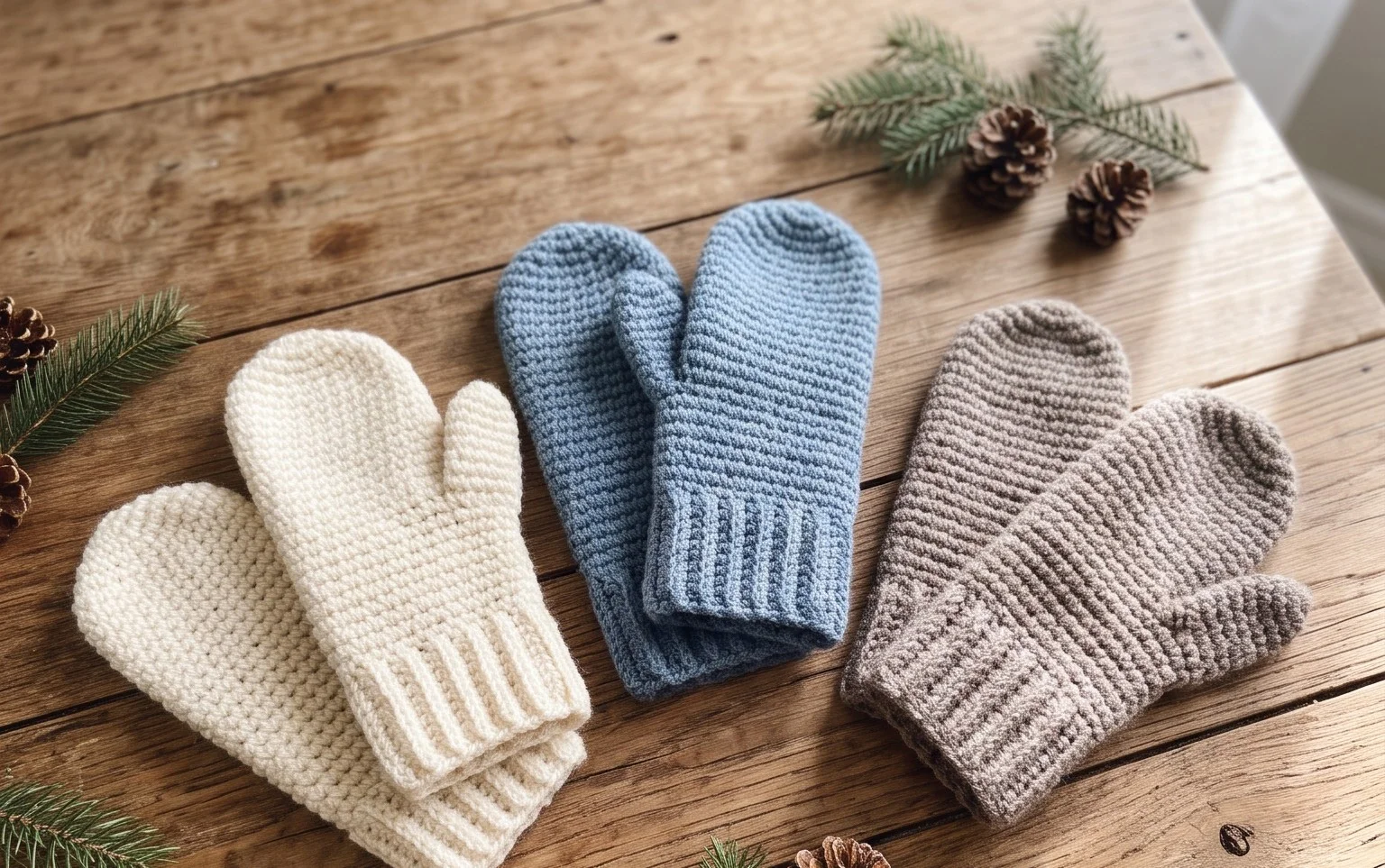
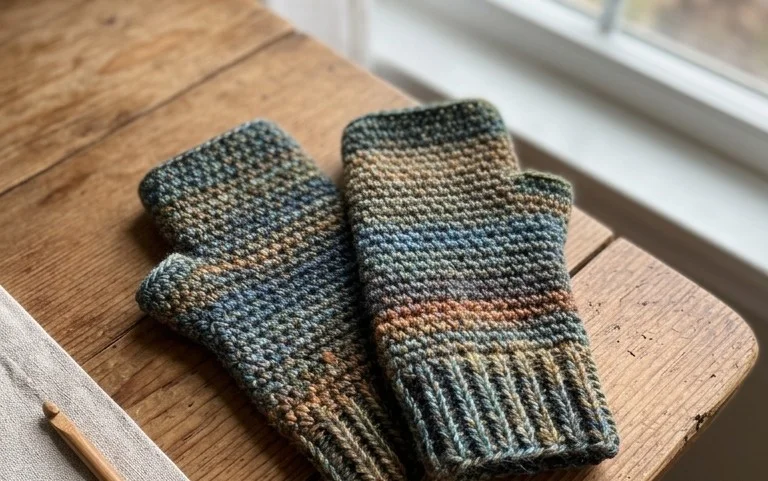
A pair of crocheted gloves feels warm and personal in a way store-bought knits rarely do, especially when the yarn is soft and the stitches sit snugly around your hands. This pattern is for beginners ready to move beyond flat squares, gift makers planning something useful, and home decor lovers who want to try a wearable project. You’ll practice steady single crochet and pay attention to shaping so the gloves sit comfortably rather than feeling bulky. Work at your own pace, checking the fit as you go, and you can adjust the length to suit your hands or the person receiving them. The finished pair makes a practical handmade gift and a satisfying project for cool-weather days.
Why You’ll Love This Pattern
A firm cotton square with simple single crochet stitches makes a useful dishcloth for everyday washing and wiping. The pattern uses one yarn color and a repeating row, so you can focus on even tension rather than keeping track of complicated shaping. It is a practical first project for learning to count stitches, and the small size makes it easy to finish in a few relaxed sessions.
The finished cloth is about 7.5 inches square, a handy size for a kitchen or bathroom. You can use a single ball of cotton yarn, and the straightforward construction also makes this a useful project for practicing before starting a larger piece.
The rows were easy to follow, and marking the first stitch helped me keep both edges straight. I finished the cloth over a couple of evenings.
— Maya, sample maker note
Pattern Overview & Skill Level
- Skill Level: Beginner. You need to know how to chain and make a single crochet stitch.
- Approximate Time: 2–4 hours, depending on your pace and experience.
- Construction: The dishcloth is worked flat in rows. Each row has the same number of stitches, with no increases, decreases, seams, or joins.
- Finished Dimensions & Sizing: About 7.5 inches square after washing and drying flat, using the gauge below. Small changes in tension can change the final dimensions.
Materials & Supplies Needed
- Yarn: About 90 yards of worsted-weight cotton yarn, also called medium weight or #4. Choose one color, or use leftover cotton for a striped cloth. Cotton absorbs water and handles frequent washing better than many delicate fibers.
- Hook Size: 4.0 mm / G-6 crochet hook. Use the hook size that gives the stated gauge; a different hook may make the cloth larger or smaller.
- Notions: Tapestry needle for weaving in the ends, scissors, and a stitch marker to identify the first stitch of each row if helpful.
- Gauge: 16 single crochet stitches and 16 rows measure 4 inches square when worked flat and measured after a gentle wash and dry.
- Substitutions: Choose another 100% cotton yarn of similar thickness for a similar result. A thinner yarn makes a smaller, lighter cloth; a thicker yarn makes a larger, bulkier cloth and may need a larger hook. Acrylic can be used for practice, but it is less absorbent and may not suit a dishcloth used for drying dishes.
Stitch Guide & Abbreviations (US Terms)
- ch = chain.
- sc = single crochet. Insert the hook into the stitch, yarn over, pull up a loop, yarn over, and pull through both loops on the hook.
- st = stitch; sts = stitches.
- turn = turn the work so the opposite side faces you before starting the next row.
The turning chain does not count as a stitch in this pattern. Make the first single crochet in the first stitch of each row, not in the turning chain. This keeps the stitch count at 30 and helps prevent slanted edges.
Step-by-Step Pattern Instructions
Dishcloth
Check your gauge before beginning. If 16 single crochet stitches measure wider or narrower than 4 inches, try a smaller or larger hook before making the full cloth. The finished size depends on both stitch tension and row height.
- Foundation: Ch 31. This gives you 30 working chains after skipping the chain closest to the hook.
- Row 1: Sc in the second ch from the hook and in each ch across. Turn. (30 sts)
- Rows 2–30: Ch 1, sc in each st across, turn. Repeat for every row through Row 30. (30 sts per row)
- Finish: After Row 30, fasten off, leaving a tail long enough to weave in. Thread the tail onto a tapestry needle and weave it through several stitches on the wrong side. Change direction once so the end is less likely to work loose. Weave in the foundation tail the same way, then trim the remaining yarn close to the fabric.
Lay the cloth flat and check the edges. A slight curl often relaxes after washing. If the sides are noticeably uneven, compare the first and last stitch of several rows; missing an edge stitch is a common cause of a tapered shape.
Care & Washing Instructions
- Wash cotton in cool or warm water, up to 40°C (104°F), with similar colors; check the yarn label before using a hotter cycle.
- Dry flat for the most even shape, or use a dryer only if the yarn label allows it.
- Reshape the damp cloth to a square and let it dry flat; blocking is usually unnecessary for a dishcloth.
Pro Tips & Common Mistakes to Avoid
- Keep your tension relaxed and consistent. If the foundation chain is much tighter than the rows, the bottom edge may pull inward; use a slightly larger hook just for the chain if needed.
- Count the 30 stitches at the end of each row, especially the first few. Place a marker in the first stitch of a row if you tend to miss the last stitch at the opposite edge.
- Weave in ends securely without pulling them tight. Work the needle through the backs of several stitches, change direction, and keep the fabric flat while you sew.
- To make a larger cloth, add the same number of chains as the extra stitches you want, then work the same number of single crochet stitches in each row. Increasing width and adding rows both use more yarn; allow roughly 15–20 extra yards for each additional inch in both dimensions, then check your yarn as you work.
Frequently Asked Questions
Can I use a different cotton yarn?
Yes. Choose a yarn close to worsted weight and check the gauge with your chosen hook. A different brand or fiber blend may feel softer, stiffer, or less absorbent, and the finished dimensions can change if the yarn thickness differs.
How can I make the dishcloth smaller or larger?
For a narrower cloth, begin with fewer chains while keeping one fewer working stitch than the chain count. For a wider cloth, add chains. Add or remove rows to change the height. Keep the stitch count even across every row, and expect larger dimensions to use more yarn.
Is this a good first crochet project?
Yes, if you are comfortable making a chain and single crochet. The same stitch repeats across every row, which makes it easier to practice steady tension. Count each row until you can reliably see the first and last stitches.
Can I sell dishcloths made from this pattern?
Check the designer’s terms before selling finished items, and follow any restrictions on commercial use. If you sell your work, describe the yarn accurately and avoid presenting the pattern itself as your own.
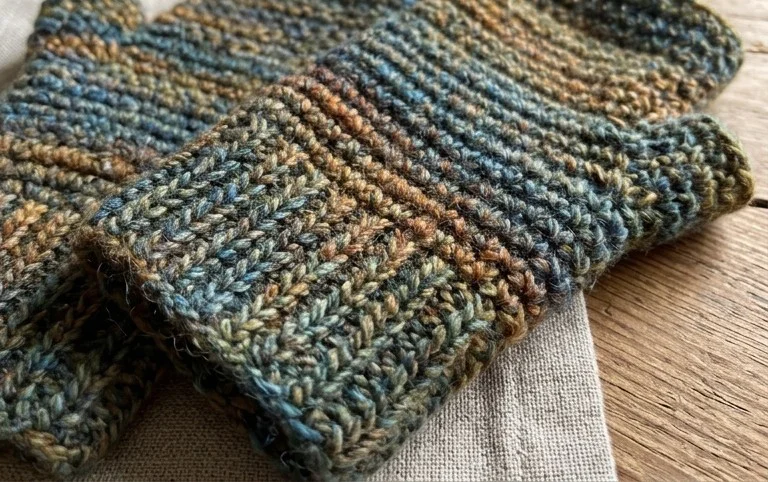
Finishing a pair of handmade gloves is a lovely payoff: you get a useful accessory you can wear as soon as the weather turns cool, or wrap up as a thoughtful gift. If you make another pair, try a darker shade for everyday wear or choose a softer yarn for a lighter feel, checking that it works with your hook and stitch tension. You can also adjust the length to suit the wearer, keeping both gloves the same as you work. Share a photo of your finished pair on Pinterest or your favorite social platform; seeing the yarn and color you chose can give other crocheters ideas. When you’re ready for another project, explore more free crochet patterns on the blog.